What Is Moxa, How Is It Used, And What Are The Benefits?
Moxa (Folium Artemisiae Aagyi)

Moxibustion in Traditional Chinese Medicine
Moxibustion is a classical therapy within Traditional Chinese Medicine that uses the heat generated by burning the herb Ai Ye (Artemisia Vulagaris, also known as Chinese mugwort) to stimulate the body’s natural healing functions. This practice has been recorded in Chinese medical texts for thousands of years and is often used alongside acupuncture to enhance therapeutic results. The burning of moxa warms specific points and meridians on the body, activating the smooth flow of qi and blood, strengthening the yang, and dispelling cold and dampness. By applying warmth directly to these sites, moxibustion helps restore circulation, regulate physiological functions, and reduce pain. Classical theory notes that it can unblock the twelve regular meridians, support organ function, and harmonize the body as a whole.
Moxibustion can be performed in several ways: indirect methods (with a moxa stick held above the skin or placed on an acupuncture needle), direct methods (cones of moxa burned directly on the skin or on protective mediums like ginger or salt), or with modern smokeless moxa for convenience. The heat may be applied steadily or in a “pecking” motion to gently stimulate the area. Treatments are typically continued until the skin becomes warm and slightly flushed, usually for 5–15 minutes per location.
One of the most well-known modern applications of moxibustion is in obstetrics. Clinical studies and classical writings both describe its use in calming a restless fetus and helping to correct breech presentation, most often by stimulating Bladder 67 (Zhiyin) with a moxa stick. It is also widely used for conditions marked by cold and stagnation, such as arthritis, chronic digestive disorders, menstrual pain, and fatigue. Many patients also find the distinct aroma of burning moxa to be deeply relaxing and therapeutic in itself.
Ai Ye: The Herb Behind Moxibustion
Internally, the same plant used in moxibustion is known as Ai Ye when prescribed as an herbal medicine. In decoctions and formulas, it is primarily used to warm the channels, stop bleeding, and regulate menstruation. Ai Ye is bitter, acrid, and warm in nature, and it enters the Spleen, Liver, and Kidney meridians. It is frequently prescribed in cases of prolonged uterine bleeding, threatened miscarriage due to cold in the womb, abdominal pain, or menstrual disorders such as painful or irregular periods.
It is important to distinguish between these two applications:
Moxibustion, also known as moxa uses the external burning of Ai Ye to stimulate acupuncture points and warm the body.
Ai Ye in formulas is used internally to influence the blood, womb, and internal channels.
From a clinical perspective, moxibustion is chosen when a patient presents with patterns involving cold, deficiency, or stagnation. For example, a patient with fatigue, cold limbs, and loose stools may benefit from warming moxibustion over the abdomen to tonify Spleen yang. A patient with chronic joint pain that worsens with cold and damp weather may find relief with moxibustion applied locally to affected areas.
Benefits
Regulate Qi and Blood
Expel Cold and Dampness
Warm the Uterus
Stop Bleeding
Warm Spleen and Stomach to Remove Stagnation
Regulate Menstruation
Reduce Pain
Expel Cold from Meridians
Flavor/Nature; Bitter and Acrid
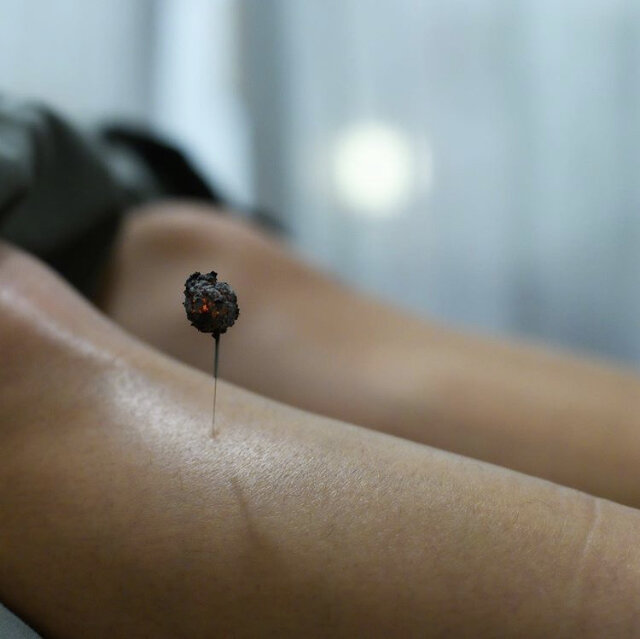
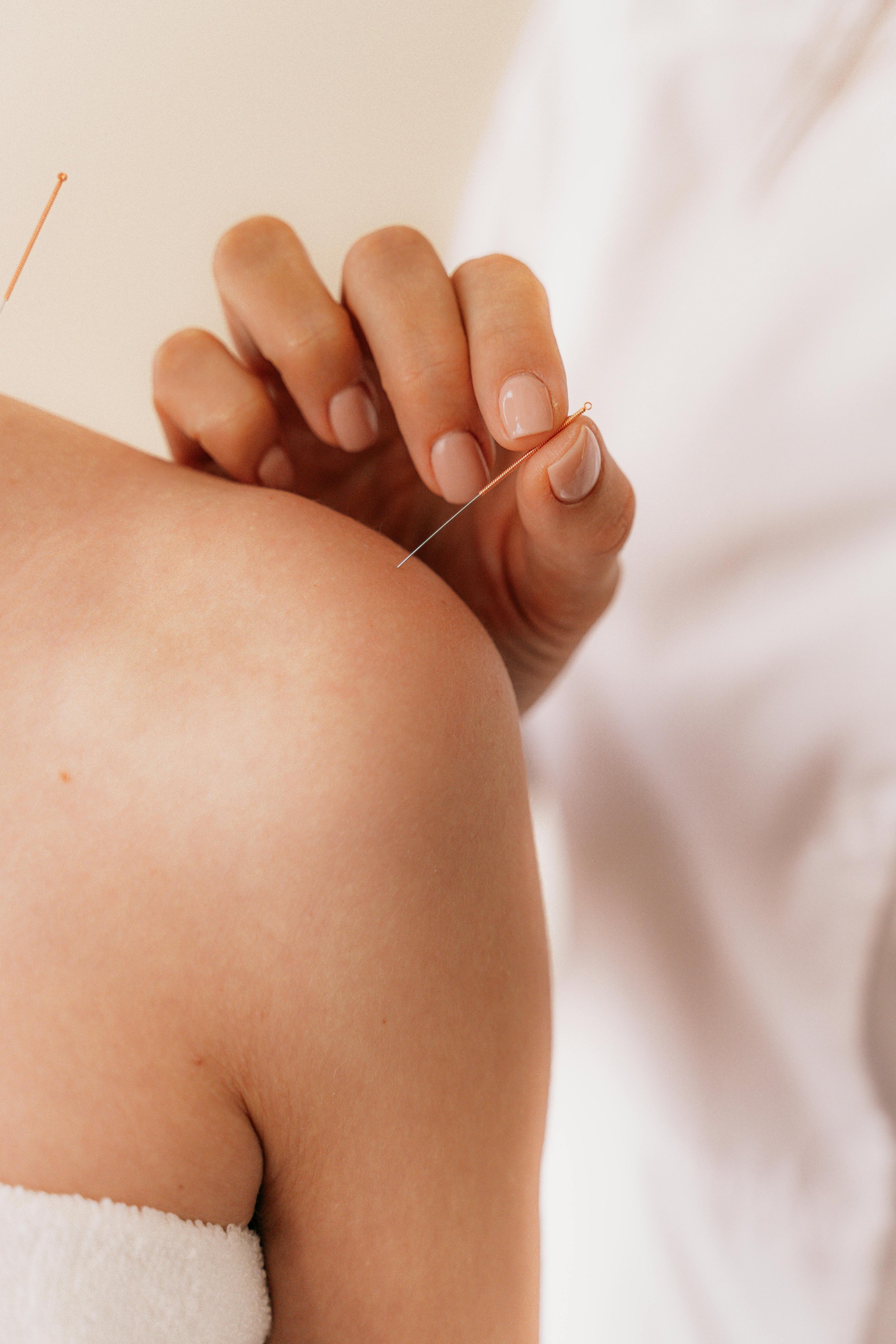
Warming needle technique performed at Wild Earth Acupuncture
How is Moxa Used?
Indirect Moxa
Direct Moxa
There are various forms in which moxibustion can be applied. One of my favorite techniques of Moxa is direct moxa, in which the dried herb is rolled into various-sized cones, placed onto the skin, and lit to create a more focused heat. A lotion called Shiunko is often used as a barrier to protect the skin from burns. Moxa can be utilized with other substances, such as salt or ginger, to enhance its therapeutic properties.
Another technique is indirect moxa, in which the leaf is pressed into a stick or pole, which can resemble a cigar or smaller rolls. It is lit and then used above the surface of the skin to create a gentle warmth. It also can be made into medicinal incense, topical creams/ lotions, and an essential oil which all have significant beneficial impacts.

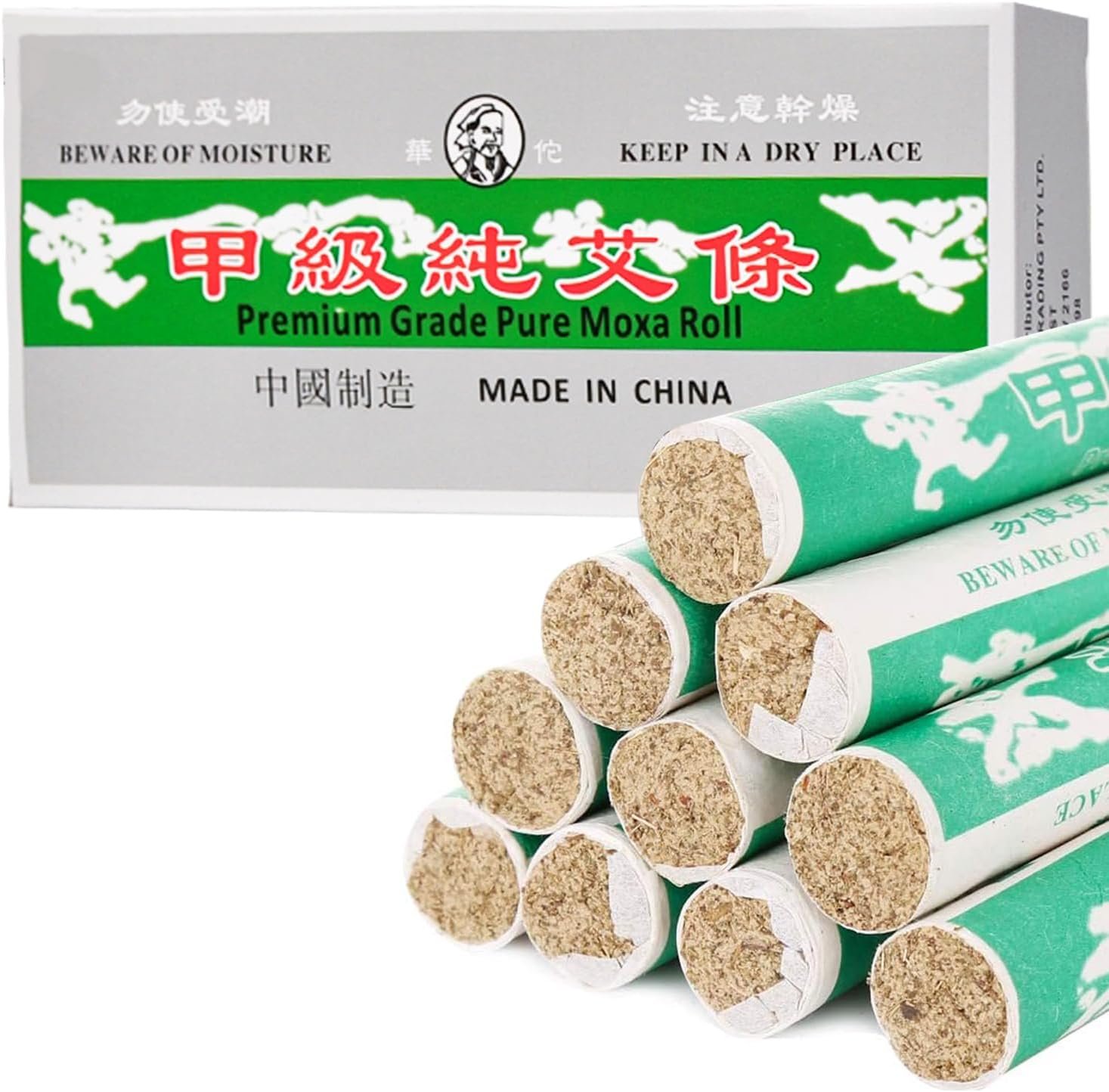
These convenient Moxa cones are used on acupuncture points and are a great way to do Moxa at home!
Benefits of Moxa
Moxa therapy is celebrated for promoting improved circulation, relieving pain, and fostering a sense of relaxation. Additionally, its application enhances the body's vital energy, or Qi, contributing to a strengthened immune system and overall well-being.
Pain management
The heat from the mona therapy can help improve circulation, blood, and lymph flow to body areas, reducing pain and inflammation.
Decreases healing times of Injuries
When more blood, Qi, and Lymph are brought to areas of the body that are in pain or injured, healing times are reduced and more mobility is seen.
Improves Arthritic pain
Moxa therapy can help ease joint pain, especially when it is the type of pain that feels better with heat and worse with cold.
Improvements in Headaches/ Decrease in Migraines
Studies have shown improvements in the duration and intensity of migraines when using moxibustion.
Benefits Gynecological issues/ Menstrual pain
Moxa is often used on specific points throughout the body to help alleviate symptoms associated with the menstrual cycle. This herb has an affinity toward the uterus.
Turning Breech position of the Fetus
One of Moxa’s most well-known indications is helping turn breech-position babies during pregnancy. This simple and effective technique is highly regarded within gynecology.
Boosts Immunity/ Protection against Flu and Colds
Moxa is often used on specific points throughout the body to help boost immunity and shorten the duration of flu and colds. Studies have shown that moxa done on the acupuncture point ST 36 helps to increase white blood cell count almost immediately after the treatment.
Improved Digestive Health
Moxibustion is extremely effective for conditions such as abdominal pain and diarrhea. Specific techniques can be used for these aliments, such as salt moxa or ginger moxa. With these techniques, either salt or a slice of fresh ginger is placed, covering the naval, and then a cone of direct moxa is burnt on top of it. Depending on the patient’s underlying pattern will determine which one is best to treat these conditions. These moxa techniques help alleviate pain and regulate the large intestine’s re-absorption of water.
Vitality Boosting/Longevity Promoting Benefits
There is a robust history from ancient China and Japan that talks about the daily usage of moxibustion on an acupuncture point called Stomach 36 (Zu San Li). This point is located one hand-width below the patella within the depression on the lateral side of the bone (tibia). This simple daily self-care routine is one of Chinese Medicines’ most “famous” preventative therapies. Daily use of indirect or direct moxa on this point helps increase one’s vitality and longevity. Some of these points’ actions and indications are known to help stimulate the immune system, enhance digestion, and help treat diarrhea and constipation. It can also increase endurance, alleviate cramps, regulate the body’s Qi, disperse stagnation, and help alleviate leg and knee pain.
Pharmacological Effects of Moxa
Hemostatic
Both fresh and charred forms have been shown to stop bleeding.
Antiasthmatic
The essential oil of Mugwort is best for this purpose.
Antitussive/Expectorant
Moxa has the potential to alleviate coughing and promote the expulsion of mucus from the respiratory tract. This dual benefit helps soothe respiratory discomfort and enhances the body's natural mechanisms for clearing the airways, contributing to respiratory health and overall well-being.
Cholagogic
Moxa therapy's cholagogic benefits involve the strategic application of heat from burning moxa on specific acupoints, facilitating bile flow and enhancing liver function to promote digestive health.
Antibiotic
Moxa exhibits antibiotic pharmacological effects by fostering an enhanced immune response, stimulating anti-inflammatory processes, and contributing to the overall balance of the body's microbial environment.
Moxa therapy is often performed by a well-versed, and highly trained practitioner of Chinese Medicine but can also easily be done on your own, at home! Make sure your practitioner goes over how to use it so you avoid any risk of burns. The pre-rolled, stick-on variant of moxa stands out as my preferred choice for individuals exploring moxibustion at home. Its ease of use and the delivery of a mild yet therapeutic warmth make it an excellent option for beginners.
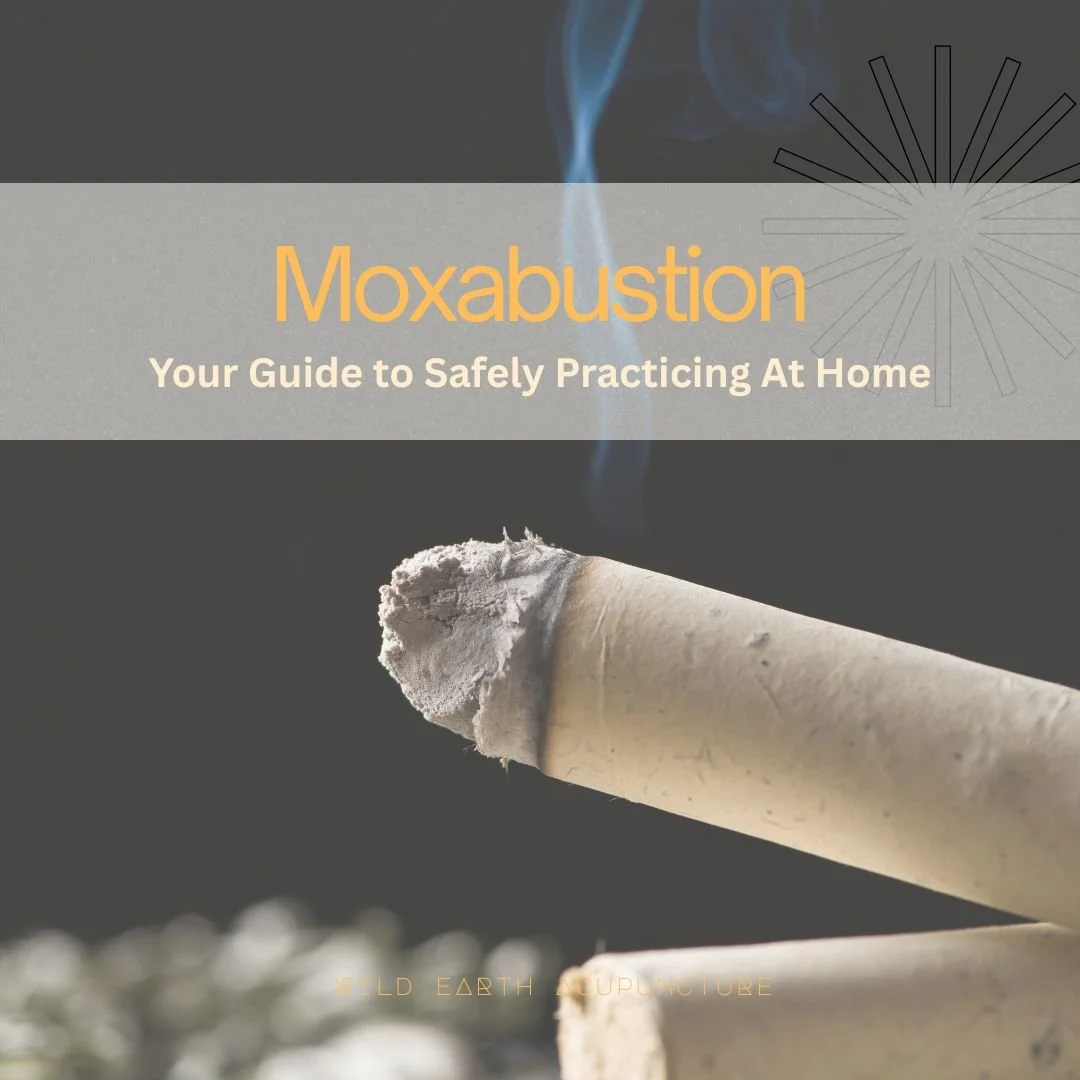
🔥 Your Guide to Safely Practicing Moxa at Home 🔥
Curious about moxa but not sure where to start? This easy, step-by-step guide will show you how to safely use moxibustion at home to ease pain, warm your body, support energy, and especially boost digestive function.
Perfect for beginners and seasoned wellness lovers alike, it’s packed with practical tips, clear instructions, and everything you need to feel confident and cared for. This guide is focused on using premade moxa poles, especially for digestive health and pain relief.
✨ Simple. Soothing. Rooted in tradition.
👉 Download now and light up your self-care routine with the warmth of tradition!
SHOP THE STORY


Sources
Coyle ME, Smith CA, Peat B. "Cephalic Version by Moxibustion for Breech Presentation. " Cochrane Database Syst Rev. 2005 18;(2):CD003928
Chen JK, Chen TT, Crampton L. Chinese Medical Herbology and Pharmacology. City of Industry, CA: Art of Medicine Press; 2004.
https://www.sciencedirect.com/science/article/pii/S1353611700905055
Want to learn more?









Archive
- September 2026
- July 2026
- May 2026
- April 2026
- February 2026
- January 2026
- December 2025
- November 2025
- September 2025
- August 2025
- July 2025
- June 2025
- May 2025
- April 2025
- March 2025
- January 2025
- December 2024
- November 2024
- October 2024
- September 2024
- July 2024
- June 2024
- May 2024
- April 2024
- March 2024
- February 2024
- January 2024
- December 2023
- November 2023
- September 2023
- May 2023
- February 2023
- January 2023
- August 2022
- June 2022
- April 2022
- December 2021
- November 2021
- July 2021
- May 2021
- April 2021
- March 2021
- November 2020
- October 2020
- August 2020
- January 2020
- August 2019
- May 2019
- March 2019
- January 2019
- December 2018
- November 2018
- October 2018
- July 2018
- June 2018
- May 2018
- April 2018
🌿 Love What You See? Want It All? This bundle was made for you! 🌿
Get the ultimate herbal wellness collection in one beautifully curated package. This bundle includes:
✨ Essential Tastes Cookbook – Explore the Five Flavors of TCM through immune-boosting, nourishing recipes.
🥗 Spleen Qi Meal Planners – Two full weeks of meal plans (vegetarian and non-vegetarian) to support digestion and energy.
🫙 Herbal Pantry for Everyday Wellness – Learn the top 10 must-have herbs and exactly how to use them at home.
Whether you’re just starting your herbal journey or deepening your practice, this bundle gives you the tools to nourish your body, mind, and spirit—season by season, meal by meal.
✨ Save big and empower your kitchen with centuries of wisdom—naturally. ✨
$70 value for only $45!